

The Parliament on Dr.-Karl-Renner-Ring in Vienna
If you’d like to tour the Parliament in Vienna, you’ll experience much more than just a historic building: A guided tour of the Vienna Parliament combines political history, impressive architecture, and hands-on visitor experiences right in the heart of downtown Vienna. In this post, we share our personal impressions and tips.
Dear guests and friends of the Austria Classic Hotel Vienna,
This time, I, Ingeborg, have brought a ghostwriter on board. My partner Fritz wrote part of this blog post. We took a guided tour of the renovated Parliament building in Vienna together, and here are our impressions of one of Vienna’s most fascinating attractions.
Die Registration
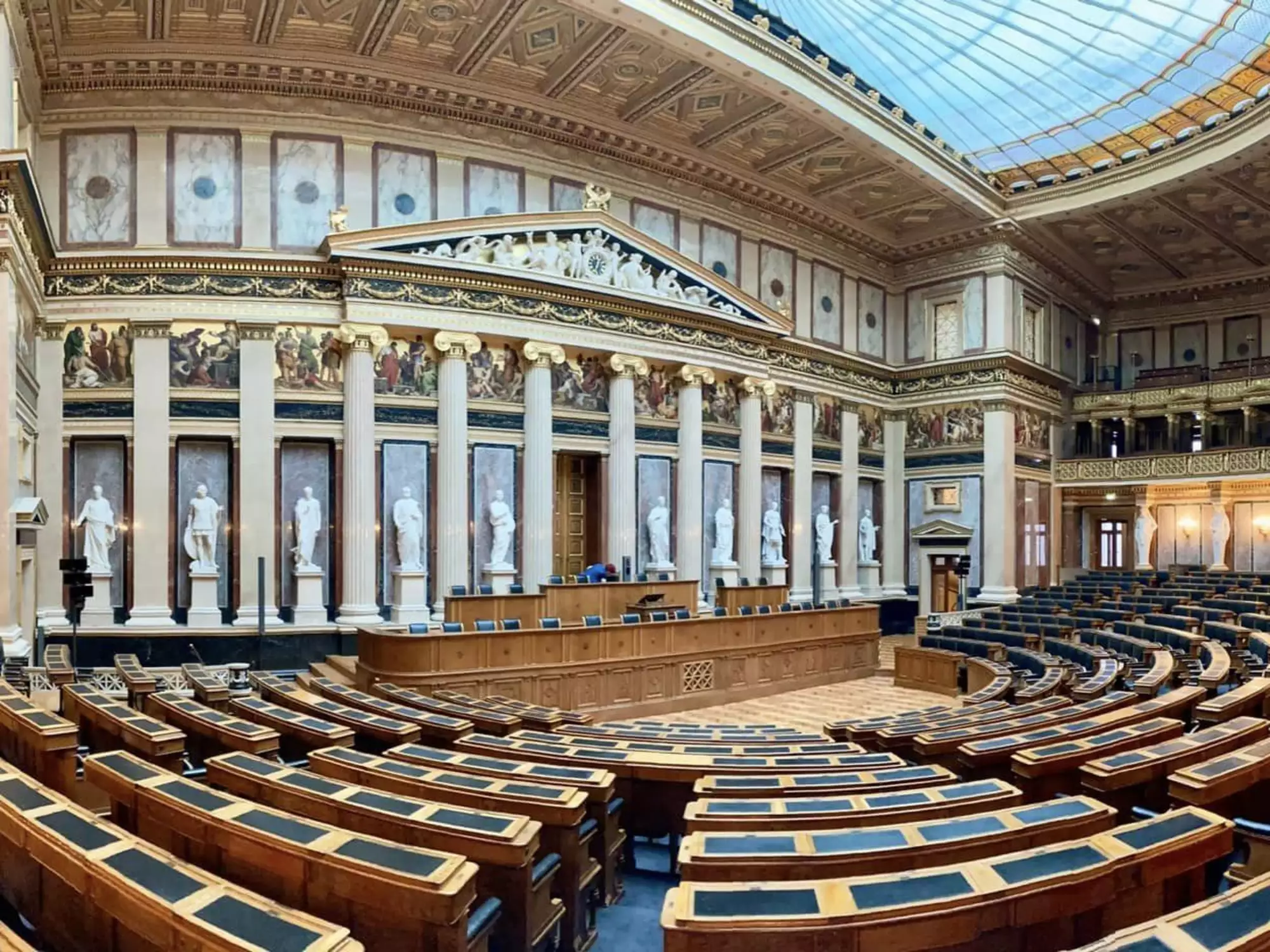
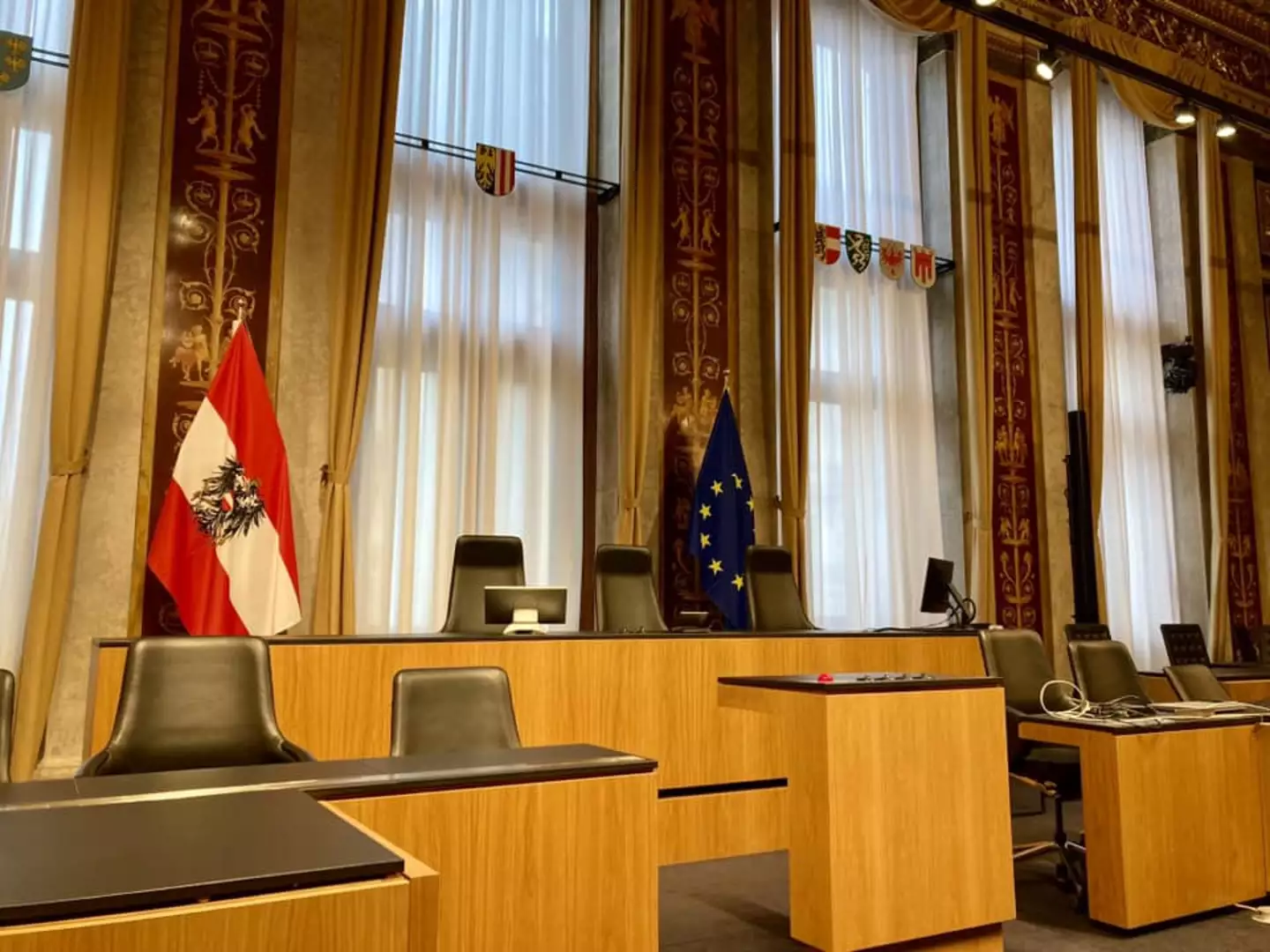
You must register in advance for the approximately one-hour guided tour of the Vienna Parliament. The tours are free of charge and are offered in various languages, subject to availability. Please bring a valid photo ID, as security checks are conducted upon entry, similar to those at an airport. For individuals, tours can currently be booked 28 days in advance. Anyone who wants to experience Vienna’s history, Austrian democracy, and impressive architecture shouldn’t miss this guided tour of the Parliament in Vienna. Photos are allowed, and you can even stand at the lecterns—it almost feels a bit like being a politician.
The Parliament
Until 1857, Vienna’s city center was enclosed by a massive city wall. That year, Emperor Franz Joseph I ordered the demolition of the city wall, which had become a hindrance due to an acute shortage of space, and the development of this area—along with the undeveloped foreland, the “Glacis”—with prestigious buildings. This marked a decisive turning point in Vienna’s urban development.
It was not until 1869 that the Danish architect Theophil Hansen was commissioned to design a building on this site to house the Chamber of Deputies and the House of Lords. Having lived and worked in Greece for many years, Hansen wanted to construct the Parliament building in Vienna in the Hellenistic style. He regarded the Parliament as his life’s work.
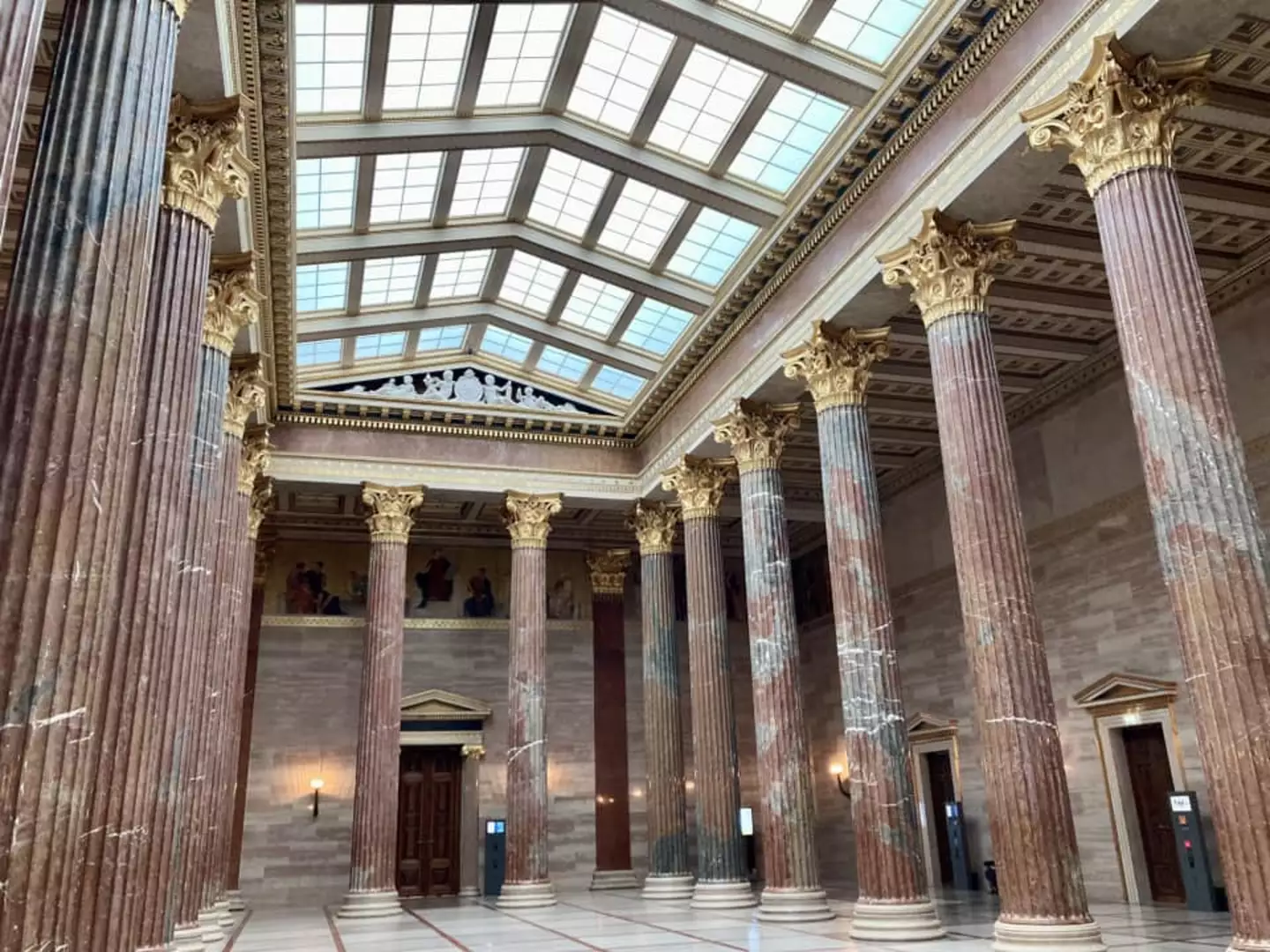
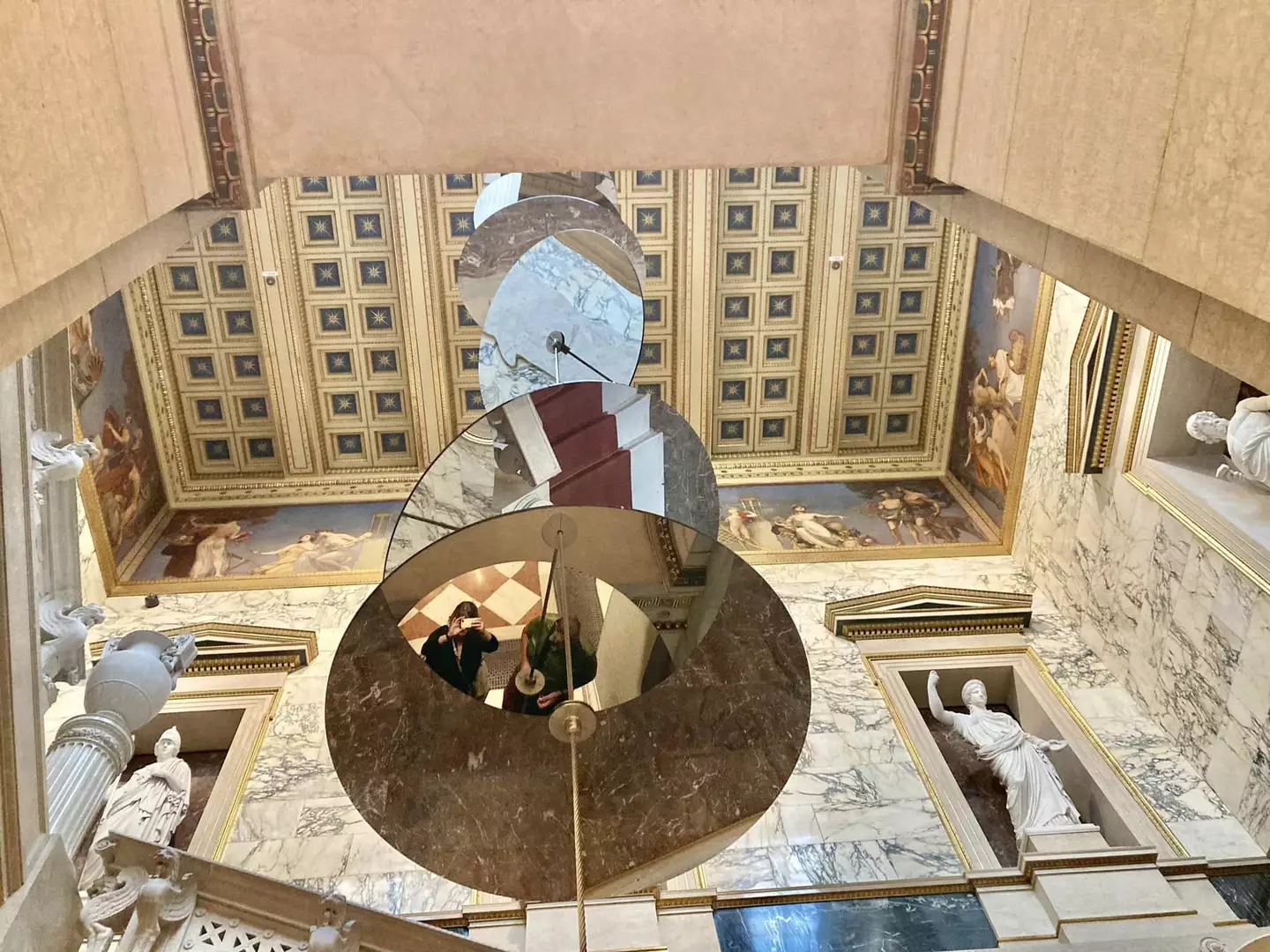
In addition to the building’s design, he conceived the entire interior, right down to the furniture—with the goal of harmoniously coordinating even the smallest details. This is precisely what makes a guided tour of the Parliament in Vienna so special: you discover not only political history, but also architecture, symbolism, and an astonishing attention to detail.
The Imperial Council Building
The cornerstone for the Imperial Council Building—now the Parliament Building on Dr.-Karl-Renner-Ring—was laid in September 1874, and the shell of the building was completed in August 1879. It was not until December 1883 that the first session of the House of Representatives was held in the new Imperial Council Building. The first session of the House of Lords followed a year later.
The construction of the building was the subject of intense public debate. Hansen, who had a tendency to act on his own authority, and the building committee disagreed primarily over the ramp, the multicolored design of the facades—which was ultimately not implemented—and the fountain.
The actual construction of the Parliament building took a decade; the final finishing touches took another three decades. Thus, the Athena Fountain was not completed until 1902, and the 121-meter-long frieze in the portico was not finished until 1911. Hansen himself supervised all the work from his studio in the House of Lords wing until his death in 1891.
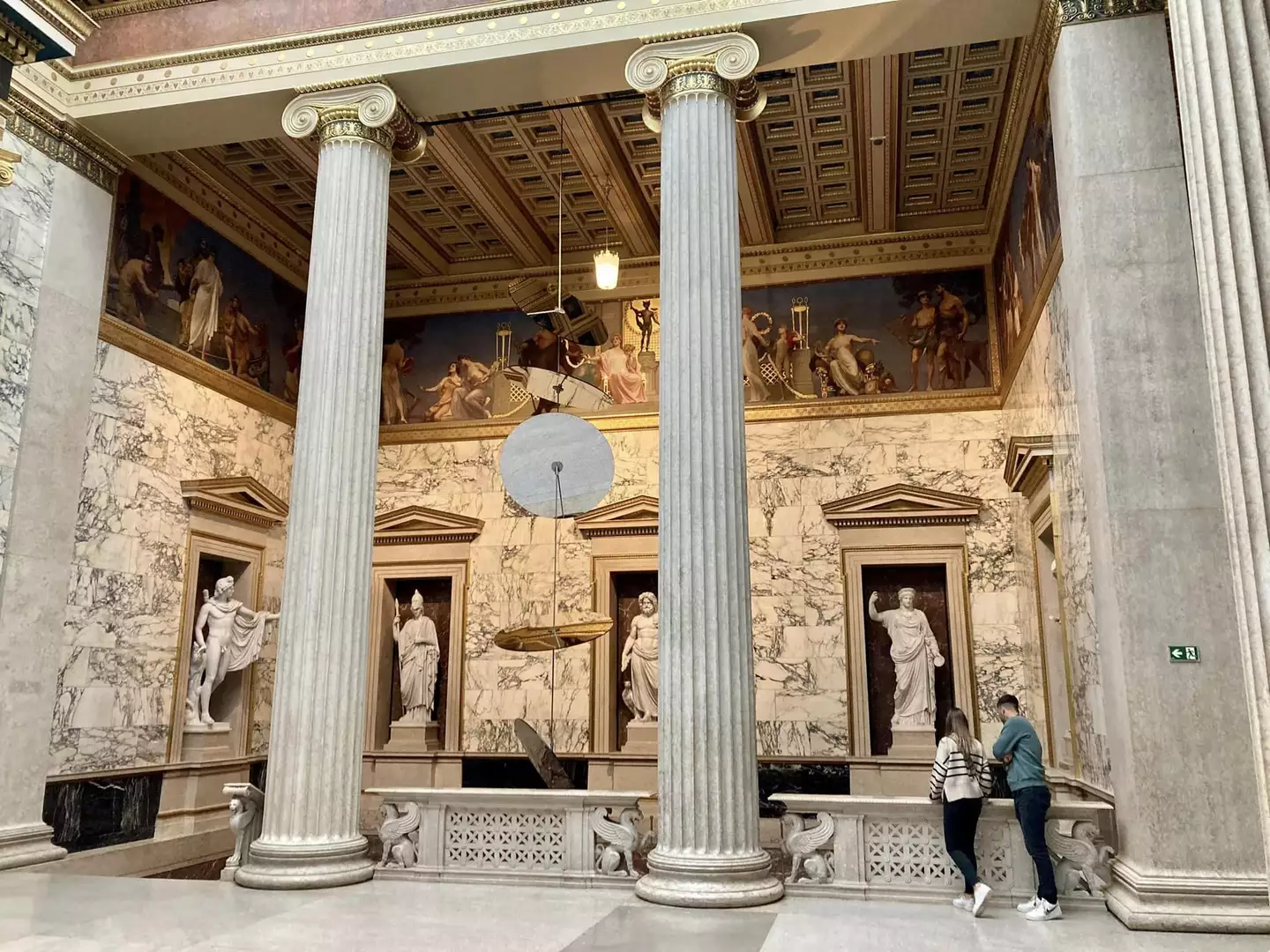
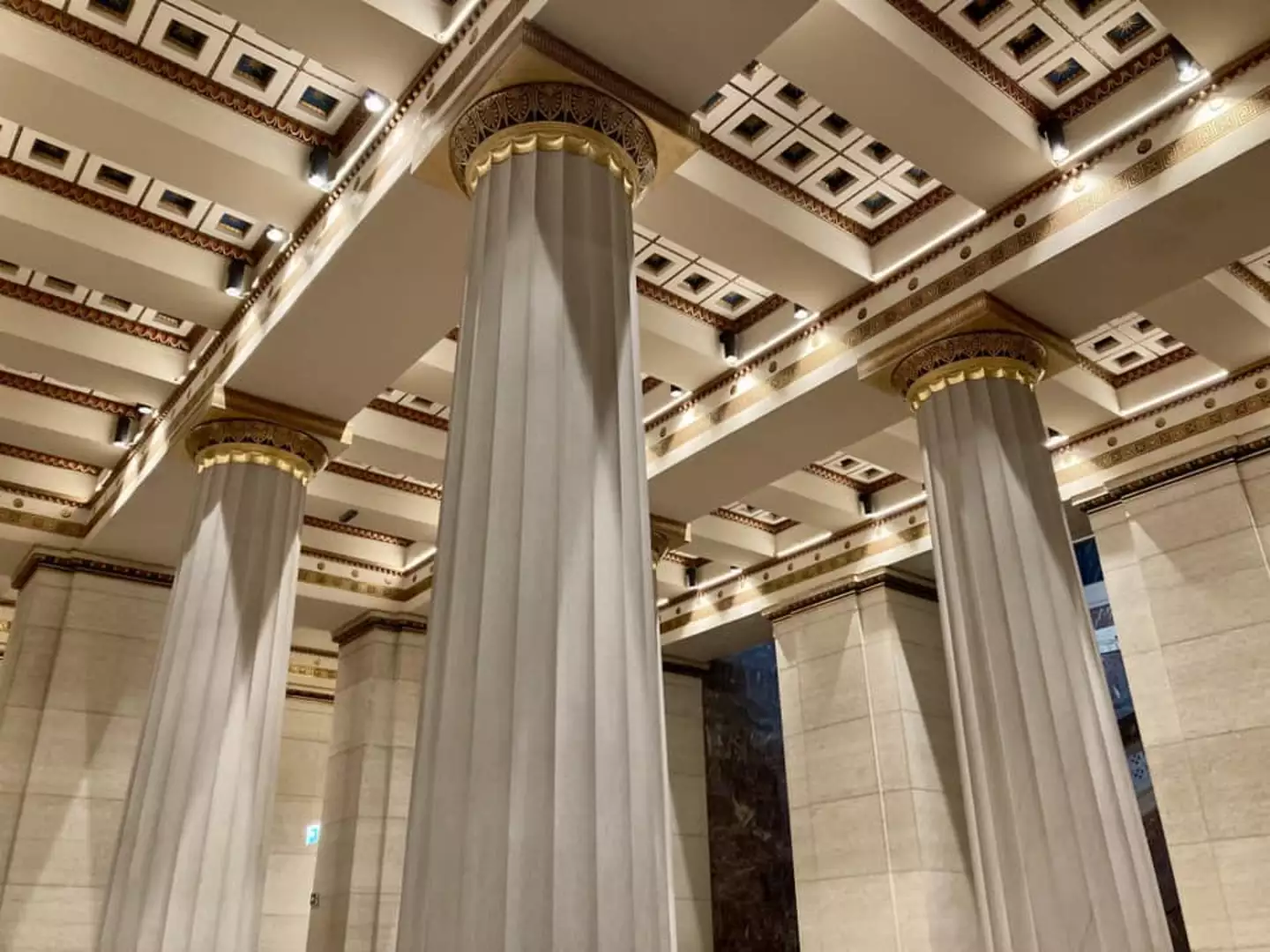
In his masterpiece, Hansen incorporated numerous allusions and references to democracy in action. He drew architectural forms and symbolism from the design language of ancient Greece to honor the origins of democracy. By using materials from the crown lands of the monarchy, he symbolized the cooperation of all forces within the Imperial Council. Thanks to his visionary conception, planning, and execution, Hansen created a monument and landmark for Austrian democracy in Vienna.
Hansen placed great importance on harmonizing the exterior and interior of the Vienna Parliament. He designed the paintings and sculptures himself and exerted significant influence over their execution. The sculptural ornamentation on the façade and inside illustrates the interplay of powers and the fundamental ideas of democracy.
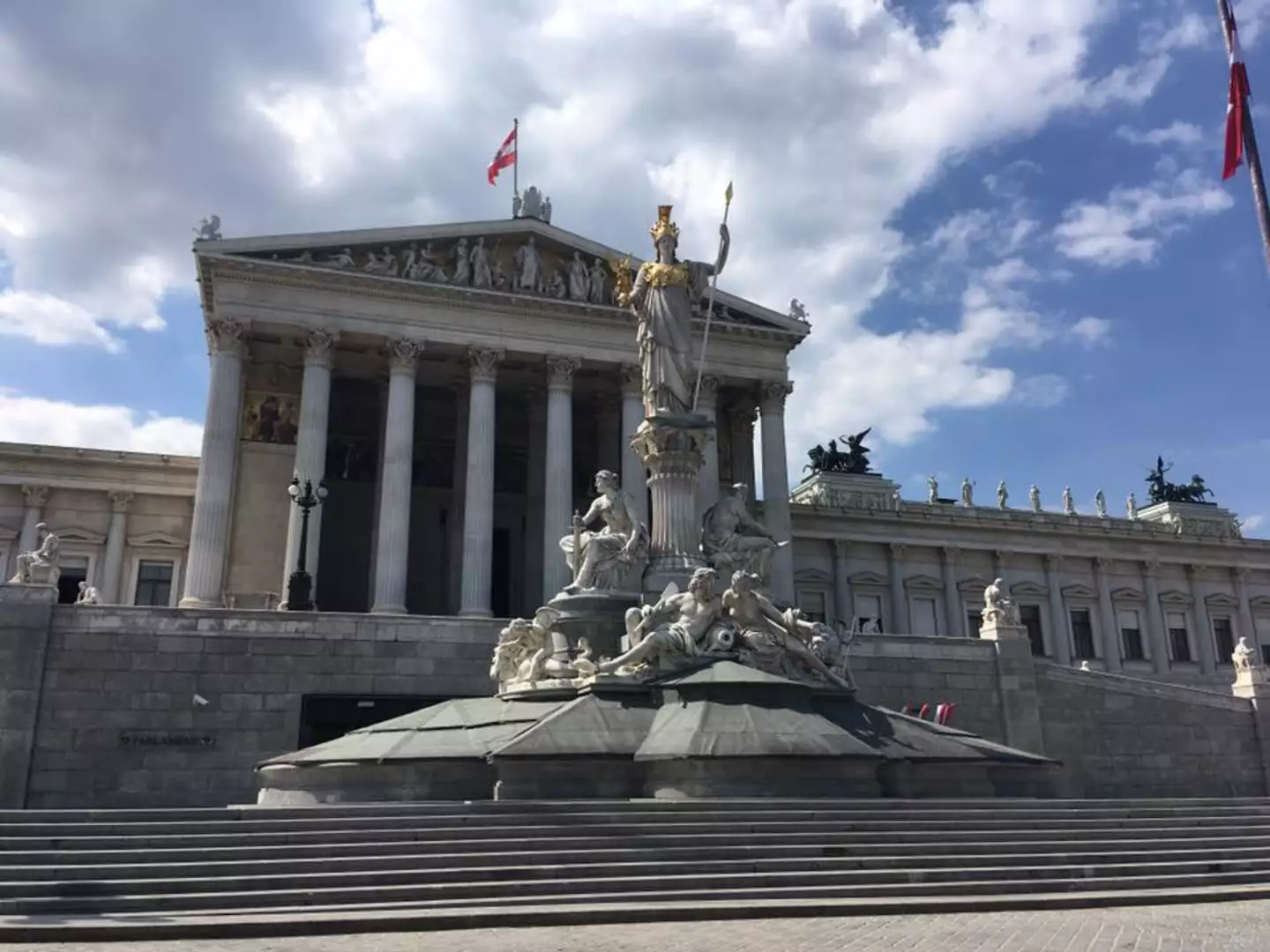
The Athena Fountain in front of the Parliament in Vienna symbolizes the separation of powers as a fundamental principle of the modern constitutional state.
- Pallas Athena, standing at the center of the fountain, embodies the wisdom of the state. Seated beside her are two allegorical figures: “Legislation,” holding a tablet of laws, and “Enforcement of the Laws,” holding a judge’s sword and a set of scales.
- A glass mosaic frieze by Eduard Lebiedzki above the main entrance to the Parliament building revisits the theme of the separation of powers.
- Another painted frieze by Eduard Lebiedzki can be admired in the portico. It was irreparably damaged during World War II and survives today only in fragments.
- The gables on the sides of the building allude to the executive and the judiciary.
- At the foot of the ramp leading to the Parliament stand the Horse Tamer figures. The bronze sculptures of men taming horses serve as a call to parliamentarians to rein in their political passion.
- The depictions of Greek and Roman historians on the ramp remind us of the responsibility of every political action before history.
Postwar reconstruction
During the fighting of World War II, the Parliament building in Vienna was severely damaged. In total, about half of the building was destroyed by fire and bombs, and much of it was heavily damaged. Renovation was unavoidable, but it would be several years before the reconstruction was completed.
However, the ravages of time and the substandard materials used in the reconstruction made it imperative, starting in the 2010s, to find a solution for the parliament building’s dire condition.
- In July 2014, the Parliament Building Renovation Act was unanimously passed by the National Council and the Federal Council.
- In August 2014, following a Europe-wide bidding process, the bid submitted by the Jabornegg & Pálffy_AXIS consortium was awarded the contract.
- In 2017, the relocation to nearby temporary quarters in the Hofburg and other locations began.
- The construction phase ran from 2018 to 2022—the entire building was renovated from the basement to the roof.
- The renovated building was opened in January 2023.
After a project duration of about ten years, this architectural gem on the Ring reopened its doors in January 2023 for parliamentary business and visitors. This marked the successful conclusion of the long journey toward renovation. The result is truly impressive: The Hohe Haus on the Ring shines in new splendor and now offers a contemporary space for our democracy.
How to get there from the hotel & dining
It’s very easy to get to the Parliament in Vienna from the Austria Classic Hotel Vienna in the 2nd district. We took the U1 to the Karlsplatz station, and from there, tram lines 1 or D take you directly to the Parliament. Alternatively, you can take the U2 from Praterstern to Schottentor and then take a leisurely walk from there. This is a convenient option for anyone staying at a hotel in 1020 Vienna who wants to explore Vienna’s city center.
After the tour, we went up to KELSEN for a drink. The coffee was lovingly prepared, and the staff were incredibly friendly. You can also eat there in the restaurant or bistro. According to the Parliament, the KELSEN restaurant is generally open during operating hours, but you should make a reservation in advance if you plan to dine there.
We hope you have a wonderful time at the Parliament, enjoying exciting Viennese history, impressive architecture, and fascinating insights into Austrian democracy.
Ingeborg & Fritz
Frequently Asked Questions
How can I tour the Parliament in Vienna?
The Parliament in Vienna offers free guided tours. Tickets for individuals are available online, can currently be booked up to 28 days in advance, and the tours typically last about an hour.
Where is the Parliament located in Vienna?
The Austrian Parliament is located at Dr.-Karl-Renner-Ring 3, 1017 Vienna, on Vienna's Ringstraße, and is one of the most famous historic buildings and landmarks in downtown Vienna
What do you need to visit the Vienna Parliament?
A valid photo ID is required to enter the Capitol building. There is also a security check for visitors and their belongings, so if you have booked a guided tour, you should arrive at least 30 minutes before it begins.
Is the Parliament in Vienna accessible to people with disabilities?
Yes, the Parliament is fully accessible. The main entrance and all areas of the building are accessible, and additional support services—such as personal assistance, wheelchair rentals, or technical aids—are available upon prior request.
Can we stay in the Parliament after the tour?
Yes, after the tour, visitors can explore other areas depending on the opening hours, including the Demokratikum – Parliament Experience, Café Agora, and the KELSEN restaurant. The dining facilities in the Parliament building are also generally open to visitors.